


Friends,
As many of you know, I’ve been working on a 4-part essay series called, “On Moving Mountains” for quite some time now, of which the fourth and final installment will be released later this month. In anticipation, I thought I’d share the central story on which Part 4 of the series is based. It’s the (crazy) tale of the 10th Century Coptic saint, Simon the Tanner, which will also be included in the upcoming essay. Here are Parts 1-3, in case you haven’t read them.


For the November Bible Reading Plan, which, this month, centers on the Book of Isaiah, please SCROLL DOWN past the story.
— Ross
The Story of Saint Simon The Tanner
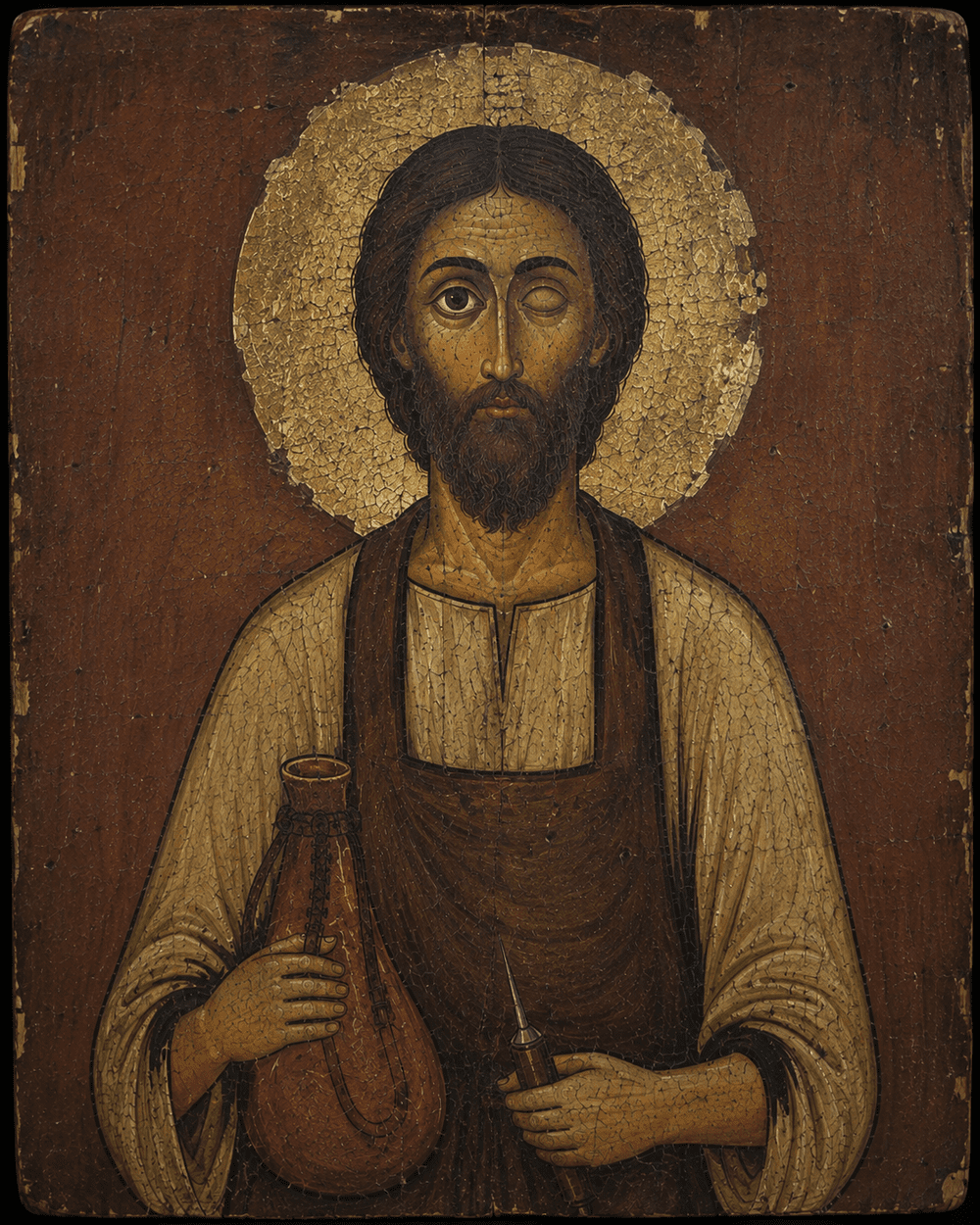
Somewhere, in the back alleys of the newly built city of Cairo, there lived a humble shoemaker named Simon, who would one day move a mountain with a word. It was the late tenth century, and Cairo had become the capital of the Fatimid Caliphate. The people of Egypt were still haunted by the recent memory of a terrible famine, which claimed the lives of over a half million men, women, and children. Needless to say, these were not easy times, even for the rich and powerful. But our Simon was no one of note. A poor man and a Christian, Simon had made it his habit to carry water each morning to the sick and elderly in his neighborhood before beginning his daily leather work.
We know nothing of his upbringing and nothing of his death. The bones of “Saint Simon the Tanner” were said to have been discovered in 1991 during the restoration of St. Mary’s Orthodox Church (the name of which will find greater significance later in this tale). To this day, if you go to Cairo, you can visit and venerate his remains there.
But of the actual life of Saint Simon, church tradition recounts only two main events. The first is this: One day, while practicing his profession, a beautiful woman came to him requesting that he repair her shoe. As she proceeded to remove the shoe, her leg showed and he caught himself looking at her lustfully. Now, I must remind you once again that Simon was a Christian, a disciple of the man who, at least as he understood it, had given quite clear instructions about what to do in such a circumstance. “If your right eye causes you to sin,” the teaching went. Thus, Simon knew what he must do. After the woman left, when he was all alone, he picked up the awl he used each day in his leather work and plucked out his right eye.
This act alone did not make Simon famous, nor did it make him any great saint. As far as Simon himself was concerned, it simply made him a Christian. And so he went on living his simple life—with one less eye—still relatively unknown and unnoticed, except by those who were daily blessed by the water he delivered and the shoes he repaired. But this was about to change.
Let the camera lens drift upward, away from the noisy, haggard streets of medieval Cairo, up, up, up to the pristine walls and the even more pristine inner courts of the grand palace in the middle of the city, where, seated on the throne we find the most powerful man in all of North Africa, the caliph of the Fatimid Empire.
Caliph Al Muizz prided himself in being something of a philosopher and a poet. Though a devout Muslim himself, he was fond of hosting debates especially with Jewish and Christian thinkers, where he allowed them to speak freely, seemingly without the threat of punishment. In one such gathering, the Coptic Pope Abraham was getting the better of a well-known Jewish scholar in a debate about which religion was the true. In a kind of last ditch effort, the Jewish scholar unsheathed his secret weapon. He quoted Jesus in the Gospel of Matthew:
“For truly, I say to you, if you have faith like a grain of mustard seed, you will say to this mountain, ‘Move from here to there,’ and it will move, and nothing will be impossible for you.”
“Are these the words of your Christ?” the rabbi declared with no small amount of dramatic flourish.
“They are,” Abraham replied.
“And you believe them?”
“I do.”
“Then prove it.”
As the rabbi spoke, he called the attention of everyone in the room to the palace window, where there, perfectly framed, stood Cairo’s Mokattam Mountain.
The rabbi’s words had hit their mark. Even the caliph was on his side now.
“The rabbi has a point,” the caliph’s voice echoed from the throne. “If the words of your Christ are true, you will perform this miracle. If you cannot, you will have proved yourself a liar in my court, the penalty of which is death, not only for you but for every adherent of your lying faith in my kingdom.”
Abraham knew the caliph was not one to bluff. And though he had no idea how to move a mountain, he did not despair. Instead, he requested three days to carry out the miracle. The caliph agreed.
When Pope Abraham left the palace, he called upon every bishop and priest in Cairo and told them to fast and pray for the next three days. This was not your typical miracle, after all. As far as they knew, no one had ever moved a mountain. Not even Christ himself had moved a mountain. But he had promised that such a thing was possible for those with even a mustard seed of faith. And so, Abraham trusted, prayed, and waited.
On the third day, as he was praying in the church, Abraham had a vision. In the vision, Mary, the mother of Christ, came to him with a message. There was a man in the marketplace, she said, a man with only one eye, carrying a pot of water. Go and find him. He will know what to do.
Abraham went. Soon enough, he found our Simon, and brought him to the foot of the mountain at the appointed time. There stood the caliph with his royal guards. There, too, stood the bishops and the priests and many others besides, waiting to see what God would do through Abraham and this one-eyed shoemaker from nobody-knows-where. Not even Pope Abraham knew.
But when the time was right, he looked to Simon, and Simon said simply, “Kyrie Eleison” (“Lord have mercy”). Abraham repeated the prayer. “Kyrie Eleison,” he said, performing the sign of the cross over the mountain.
For a moment, nothing happened. All was silent. And then the mountain…moved. Mokattam Mountain uprooted itself and lifted completely off the ground so that sunlight shone underneath for everyone to see.
“Again,” said Simon. And Pope Abraham and the bishops and priests said the prayer a second time. And the mountain was again lifted up, the light shining underneath even brighter than before.
“And again,” said Simon. “Lord have mercy.” The mountain was lifted a third time.
Of course, all were amazed. The caliph was struck speechless with fear. Abraham turned to look for Simon, but he had already disappeared back into the crowd, his role accomplished.
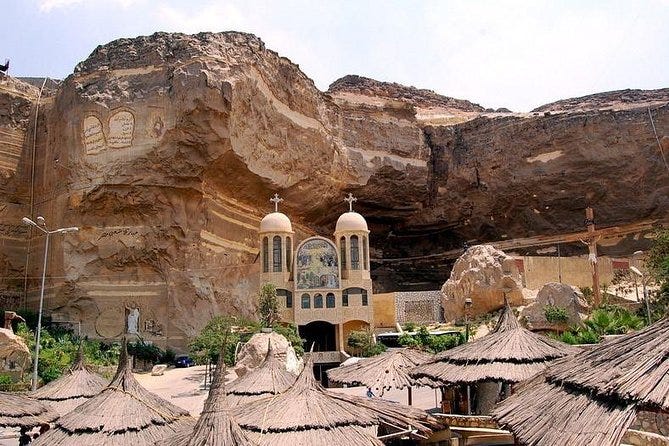
In the weeks that followed, Caliph Al Muizz gave up his throne and, if you can believe it, was baptized as a Christian. In commemoration of the miracle of Mokattam Mountain, Coptic Christians from that day to this have added three extra days to their Advent fast (43 days instead of the normal 40), and a church now exists in the hollowed out part of the mountain which was thought to have fallen away on the day when that mountain was moved with a word.
That is the story of Saint Simon the Mountain Mover. Tune in for the rest of Part 4 on moving mountains, entitled “The Gift of Tongues,” coming soon.
The November Bible Reading Plan
Below you’ll find the Scripture readings for this month. If you’re the analog type, you can access the reading plan here and print it out or bookmark it on your phone or computer.
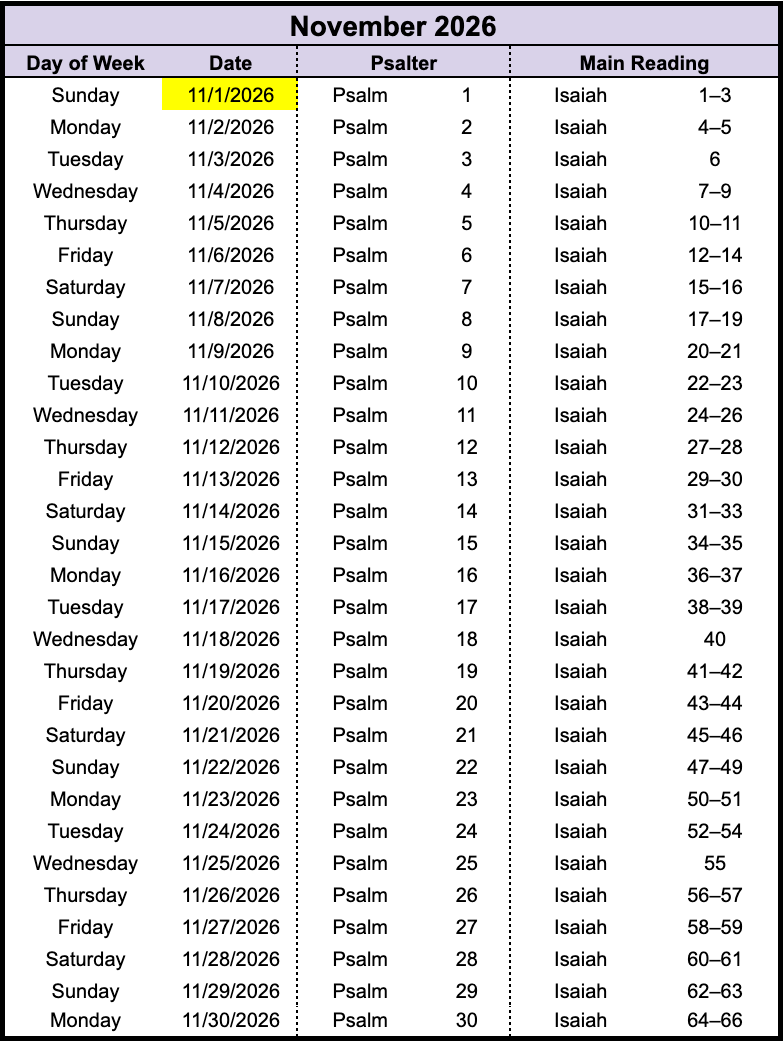
This month we’ll be reading through the Book of Isaiah. The readings are longer than usual, because I wanted everyone to be able to take in the whole chapter in a month. If you get behind, don’t quit and don’t pick up where you left off if it’ll be too overwhelming to catch up. Just continue on with the reading for that day. Isaiah is a difficult book, but it’s worth putting in the time, even if you only glean a very small amount. As usual, I recommend watching the excellent Bible Project video introductions linked below before you begin. Happy reading!
5 Practices To Embody Your Faith
If you’re new here, I’d like to invite you join us in committing to five simple practices for re-embodying your faith. Here’s a quick synopsis of the five practices with some links to get you started:
SCRIPTURE: We share a common reading schedule, usually one passage from the Old Testament, one from the New Testament, and a Psalm each day. Learn more: How To Read The Bible
PRAYER: We pray on our knees the first minute we get out of bed and the last minute before our head hits the pillow. Learn more: How To Pray
FASTING: Fasting makes space for God. We do it in different ways in different seasons (e.g. internet fast on Sundays; no meat or dairy on Fridays; special alms-giving in summer). Learn more: Why We Fast
CHURCH: Make a commitment to physically go and worship with other Christians at a local church every Sunday. Learn more: Losing Our Religion
AUTHORITY: Begin to ask God for a trustworthy pastor, priest, or spiritual leader. Then approach that person and give them authority in your life. Learn more: What Is A Priest?
For more on the integration of Christian faith and practice, read this post:

Been waiting on this one!!