



To those of you patiently awaiting Part 4 of “On Moving Mountains,” this is…not that. It’s more like a related intermission (Part 3.5?). I’m still plugging away at the conclusion of the series. But, dare I say, this essay might be even better. It’s the product of about twenty years of my theological thinking; sort of my own personal “theory of everything.” I originally wrote it as a follow-up to my Mere Orthodoxy essay, “Why God Hides.” Some of you may have seen an earlier draft at some point (it’s seen a few iterations). But I thought now was the perfect time to clean it up and share the final version here. There’s also an audio version for those who prefer to listen. Cheers.
Intro: Born To Die?
“Jesus was born to die,” is an expression you sometimes hear in Evangelical Christian circles. Of course, people don’t mean it quite the way it sounds—that he was literally only born to die for our sins—but we’re sometimes tempted toward a theology that takes this shape, where the cross becomes not just the climax of the story, but the summation of it. No further context is needed. Sure, the Gospel accounts give a lot of interesting information about the kind of person Jesus was, but this mostly serves to prove that he was the right person to die for our sins. In this view, being a Christian comes to mean little more than understanding “what the cross does for you,” as though the death of the Messiah were a mere mechanism for the removal of guilt, an event which might have been just as effective if it had taken place on the moon.
I may be overstating the problem. But the fact remains that many Christians today struggle to see the connection between the events of Holy Week and the rest of the life and ministry of Christ, which precedes and sets the stage for his death and resurrection.
On the other hand, there are those on the Christian Left who see the early chapters of the Gospels as absolutely central, even climactic. In Christ’s earthly ministry and teaching, as they see it, Jesus proves himself to be the social-justice revolutionary they always knew he was. “Blessed are the poor,” etc. And at times, this seems true enough. At other times, not.
As any honest reader of the Gospels discovers before long, Jesus is not easily pinned down. Picking and choosing the parts of him that fit well into your own system of thought is a pastime as old as Christianity itself. But the truth is most often found in the patient (painful) integration of the parts that don’t fit—the parts we don’t even like. It’s in that place of tension that we begin to discover, bit by bit, who he is and who we are.
Imagine Jesus giving a sermon series at almost any modern church—progressive, traditional, or otherwise. Imagine an anonymous Jesus standing at the pulpit for three or four Sundays in a row, delivering, for the first time, the parable of the Unjust Steward or the Ten Virgins or even the Sermon on the Mount and then simply sitting back down. If Jesus were your preacher, how long would he have a job?
What are we to make of Jesus’s earthly ministry? How do his words and actions in the early chapters of the Gospels integrate with the events of his death and resurrection to form a unified whole? What is the through-line? If he had one mission, what was the nature of that mission?
Let me be more specific: Why heal a blind man without even telling the man who he is? Why raise Lazarus if he’s only going to die again? Why feed the five thousand, knowing that tomorrow they’ll have to find their own food once more? Why touch lepers or heal the sick? Why speak in riddles and parables about “the kingdom of God,” when he could have used those same precious opportunities to speak straightforwardly about who he was and what his followers needed to believe in order to be saved?
Why does he constantly refuse to give straight answers to straight questions? Is there some special logic that gives unity to all the interruptions and seemingly random interactions that make up the Gospel accounts? Was there a plan? Or was Jesus merely “on his way” to the cross, which alone would save us from our sins?
My answer: there was a plan.
In a sense, that plan was very simple: obey the Father. But because Jesus did obey his Father, his ministry became a kind of unveiling of a much more complex and far-reaching plan: the Father’s patient campaign to reconcile the world to himself through his Son.
Of course, I don’t claim the ability to see or articulate the whole plan in its perfect sublimity. But I think I can see a particularly central through-line: a certain divine strategy or philosophy of communication, which at first glance, might appear to us a losing strategy. And yet with it, Jesus transformed the world. And with it, we can join him in reconciling the world to God. I call this strategy…soil-tilling.
The Problem of “Getting Through”
Almost all intimate relationships suffer from a kind of “elephant-in-the-room” problem at one time or another, to one degree or another. Think of that close friend, family member, or coworker, with whom everything is fine except for one thing. And that one thing is the thing that could change everything…if only the person could hear it. But they can’t. You know this, because you’ve tried a hundred times. No matter what you say or do, there is no getting through. The message you would preach is probably simple enough. You might even be able to boil it down to a single sentence: “I love you.” “You are beautiful.” “You have to trust me.” “You have to stop this.” “You’re an alcoholic.” Whatever that one statement might be, they will never hear it. So eventually you give up. You leave. Or else, more likely, you stay and resolve simply to coexist with the person and their blindspot. Perhaps you’re thinking of that someone right now.
But now, let me ask a slightly different question: Have you ever wondered if you might be that person for someone else? What if the people who love you most—and who know you best—wish that you could just hear one thing? They’ve been trying to tell you. Maybe they’ve been trying for years. Or maybe they gave up long ago, because there was no getting through…to you.
“Getting through” is the central problem of communication, which, in a sense, is the central problem of human relationships. But this is counterintuitive. When we think of communication, we tend to think of the message. The speaker says something, and then it has been communicated.
But that’s not exactly true.
The telling is only half the story. And, as we’ll see, it is by far the less interesting half. In order for something to be communicated, it must be sent and received. You can go tell it on the mountain all you like, but without ears to hear, nothing has been communicated. To “communicate” literally means “to make something common,” that is, to make it known. Jesus understood this, I think, in a deeper way than anyone ever has. This is why he said so often, “He who has ears to hear, let him hear.” Because, if you want to communicate anything successfully, the hearing is just as important as the message.
Most of us, I think it’s safe to say, don’t really believe this. We say things like, “All you can do is tell the truth. It’s up to the other person to receive it.” “You can lead a horse to water, but you can’t make it drink.” Or, in Evangelical terms: “You can bring the message, but it’s up to the Holy Spirit to do the rest.”
These statements rightly acknowledge that getting through is very hard work. But they also assume that this hard work is someone else’s to do. It couldn’t possibly be my responsibility to get through. Whether a person hears and receives the truth is a problem of some other realm, for “them” to figure out, or God. It’s certainly not my problem.
But such assumptions ignore the part of communication with which Jesus was most interested. In John 3, speaking to Nicodemus, Jesus sums up the central problem of his ministry in one sentence,
This is the judgement: the light has come into the world, but the people love the darkness rather than the light, because their deeds were evil. (John 3:19)
In other words, it’s not just that the world is full of darkness and needs his light to drown out the darkness. If that were the case, the problem of sin and its corresponding solution would be relatively simple: “Hooray! The light has come! Problem solved.” But no, it’s much more complicated than that. The light has come into the world, but the people don’t care. There’s no room in the inn. Even worse, they don’t want the light; they want the darkness. They love the darkness. In fact, it’s understandable that they do, since the source of the light is the fire of God. The same light which might have given them sight now also threatens to expose them, even to burn and blind them.
Just because the light has come does not mean it can get through to their hearts, to the level of their loves. And as long as they do not love the light, the light itself will condemn them. In a kind of terrifying reversal of Psalm 139, even the light will be darkness to them.
The Parable of the Soil-Tiller

Jesus’s Parable of the Sower in Mark 4 speaks directly to this problem of reception. “Listen,” Jesus says, not inconsequentially, since the whole parable is about our ability, or inability, to hear. A farmer sows seeds on four different types of ground—path, rocks, thorns, and fertile soil—and the seed fails to bear fruit in every location except the fertile soil.
Afterward, in a kind of perfect irony, the disciples don’t understand the parable. In fact, they seem to question the whole technique of parable-telling (v. 10). Why does he even speak in parables in the first place? Wouldn’t it be much more efficient if he would just come out and say what he means? Jesus responds, “Do you not understand this parable? How then will you understand all the parables?” (v. 13). That is to say, the Parable of the Sower is the meta-parable, the parable about parables, the seminal revelation of Jesus’s whole communicative strategy, at least, for those with ears to hear (vv. 3, 9, 23).
What, then, is this strategy?
Well, first you have to understand the context of this discussion between Jesus and the disciples. The Gospel of Mark is famous for its special emphasis on what some scholars have called “The Messianic Secret.” Throughout the first half of Mark’s account, not only does Jesus continually refuse to reveal his identity, at times he actively hides it. To add to this, Mark’s Gospel is particularly action-packed. Jesus doesn’t say much. He does things: fasts in the desert, gathers his disciples, casts out demons, heals the sick, touches lepers, feeds five thousand, and walks on water. But right in the middle of the first half of Mark, in chapter 4, we get a break from the action. Everything slows down, Jesus opens his mouth, and out comes…the Parable of the Sower.
Perhaps, the reader thinks, we’re going to get an explanation for all this mysterious activity. And indeed, that’s exactly what we get. Except that Jesus’s explanation, at first glance, seems even more mysterious than his actions.
After sharing the parable, Jesus explains to his confused disciples that the seed is “the word” and the various types of ground represent the receptivity of the human heart. On the path, Satan, like the birds, steals it away immediately. On rocky ground, it grows up quickly, but trouble and persecution scorch it before long. Among the thorns, the word grows deeper roots, but the weeds of worldly cares and distractions eventually choke it out. Only in the fertile soil does it bear fruit, thirty, sixty, and one hundred times what was sown.
The parable and its explanation raise some uncomfortable questions. Here are two that come to my mind: 1) Is God a bad farmer? 2) Am I the good soil?

Is God A Bad Farmer?
At first glance, the Parable of the Sower might tempt us to think of God as someone who just throws his seeds casually to the wind, letting them fall where they may. But, of course, God is not a haphazard farmer any more than he is an unjust judge. Rather, Jesus is painting for us a picture of the problem of communication (made all the more relevant in the age of the internet, by the way): distribution is easy; reception is complicated. The seed—in this case, the truth of the gospel—is simple and plentiful, but the ground—the human heart—is a complicated mess. Thus, the problem is not in God, but in us. Which leads us to the second question:
Am I the Good Soil?
“Well,” you might say, “the problem is in some of us. Some, after all, are fertile soil!” And yes, there is a certain, let us say, hyper-Calvinist way of reading this parable, which carries the blessing and the curse of rendering Jesus’s words immediately unmysterious. In this understanding, the path, the rocks, and the thorns represent three types of reprobate individuals, those who are not chosen. Likewise, the fertile soil represents the hearts of the elect. Everyone has known someone with a heart like the path, who simply cannot (or will not) entertain the truth of the gospel. Likewise, we have seen people receive the word with joy, only to give it up again the next month or year when times get tough. We have also known some who have bought in completely, who grew deep roots in the church for a long season, and yet, whose devotion to the gospel was eventually choked out by other concerns and allegiances. Finally, we have seen a simple seed of truth find such fertile soil in a person that it bears a hundred times what was sown. Thus, Jesus could be talking about four different types of people.
But there’s reason to believe this is an oversimplification. It’s good to remember, especially in our non-agrarian age, that almost every farmer would have been faced with all four types of ground on his one piece of land. Paths, rocks, thorns, and fertile soil are not so much four completely different types of ground as four common elements of any one plot. So, too, the human heart. If we consider the seed more broadly as “truth” of any kind, you might consider how this is true of yourself, how you are, simultaneously, the sort of person who has been fertile soil to certain truths, while other truths which you received at first with joy have since been quickly scorched by trials or else slowly choked out by other cares and distractions. You might even be able to imagine—though of course you would be blind to the details—that you are also the sort of person for whom certain truths simply cannot go in, no matter how hard others might have tried to get them through. Your heart, in fact, is every type of ground at once. And so is mine.
This, again, is the problem of communication, as Jesus presents it. The seed is simple and plentiful, but the soil is complicated and problematic. The Word became flesh in the world, yes. But what if the word will not easily be received by those who hear him? How do you make the horse drink, if it won’t?
Why Parables? So That They May Not Understand.
This brings us to the central most part of Mark 4, which also happens to be the most confusing part, in which Jesus explains to the disciples why he speaks in parables. Recall that the disciples’ main confusion at this point is not so much, “What does this parable mean?” but, “Why parables? Why is Jesus acting and speaking in such a mysterious fashion? Why not be clear?” The disciples don’t ask these specific questions in the text, but I think this pretty well sums up the sentiment of the disciples, as well as the reader of Mark’s Gospel at this juncture.
In response, Jesus gives one of the more mysterious answers that exists in the Gospel accounts. To this day, it goes right over our heads. If you asked a random Christian today, “Why did Jesus speak in parables?” they would likely reply, “He used images and stories to better relate with his audience, to make his teachings easier to understand.” This is a fine answer. The trouble is that Jesus says something like the opposite:
To you has been given the secret of the kingdom of God, but for those outside everything is in parables, so that
‘they may indeed see but not perceive,
and may indeed hear but not understand,
lest they should turn and be forgiven.’ (Mark 4:11-12)
So according to Jesus, he tells parables so that people will not understand. And, as though to make the whole thing even more offensive, he adds, “lest they should turn and be forgiven.” So, seemingly, Jesus doesn’t want them to understand and doesn’t want them to be forgiven.
Here again, there’s a certain kind of Calvinism which claims to resolve this tension in short order: “What exactly is confusing?” they might reply. “The whole passage has been about God’s eternal election from the beginning. Some are the path, some the rocks, some the thorns. But only in those who are divinely chosen to be fertile soil does the seed of the word take root and bear fruit. Jesus makes clear in this very passage that the parables are a dividing mechanism, marking in-group from out-group. To the chosen, the secret of the kingdom is being divulged. To those outside, it is not. They will hear but not understand, because they were not meant to understand. They are objects of wrath. Why? Because God deemed them as such by his own eternal decree.”
Let’s give this view its due. It does fit well in the context. It does seem to solve most of our problems. The parables do serve as a dividing line between in-group and out-group. Jesus basically says that. So yes, this is a parable about election. The trouble is that election in the Bible is not as straightforward as this logic might suggest.
How God Elects

In Scripture, when God chooses someone to be “in” and others to be “out,” he is not usually drawing an eternal line in the sand, but rather playing a longer game by which those inside the line become a blessing even to those beyond it. To be clear, election does involve exclusion and curse for those outside, but if and when the elect are faithful, even the excluded and the cursed may find themselves to be the inheritors of the blessing of God. God chooses some now in order to bless many later. His is an incremental salvation. The mustard seed eventually becomes the largest tree in the garden. The quintessential case is, of course, Abraham. Why did God choose Abraham and his offspring? So that the nations—that is, the now-un-chosen—would be blessed through them. This is what God literally says to Abraham and to his offspring on multiple occasions. He narrows in order to broaden, chooses some and excludes others in order that many might be included in the end.
And lest we be tempted to think this is only an Old Testament theme, the same pattern is clearly revealed in Jesus’s own words and actions in the New Testament. This is, for instance, the structure of his entire High Priestly Prayer in John 17. (Note especially the contrast between the emphasized verses below.)
“Father, the hour has come; glorify your Son that the Son may glorify you, since you have given him authority over all flesh, to give eternal life to all whom you have given him. […]
“I have manifested your name to the people whom you gave me out of the world. Yours they were, and you gave them to me, and they have kept your word. Now they know that everything that you have given me is from you. For I have given them the words that you gave me, and they have received them and have come to know in truth that I came from you; and they have believed that you sent me. I am praying for them. I am not praying for the world but for those whom you have given me, for they are yours. All mine are yours, and yours are mine, and I am glorified in them. […]
“I do not ask for these only, but also for those who will believe in me through their word, that they may all be one, just as you, Father, are in me, and I in you, that they also may be in us, so that the world may believe that you have sent me. The glory that you have given me I have given to them, that they may be one even as we are one, I in them and you in me, that they may become perfectly one, so that the world may know that you sent me and loved them even as you loved me.” (John 17, selections)
Jesus’s prayer is a peek behind the curtain at God’s master strategy for “reconciling the world to himself.” And how does it work? Does God bring the megaphone straight to the world? No. Does he send his Son to bring the megaphone straight to the world? Still no. The Father chooses to send his own Son. The Son chooses “his own” from among the world. He does not pray for the world, because they are not his immediate chosen ones. Rather he prays for his own, because through them (who represent him as he represents the Father) the world might come to believe and know the love of God. From Father to Son, from Son to disciples, from disciples to the world. This is how election works.
When the Father sends Jesus to be “Abraham’s seed” (singular, as Paul points out), does this mean he has rejected Israel? No. Jesus becomes Israel so that Israel (and the world) might be saved. When Jesus reveals himself to his disciples and does not reveal himself to those outside—when he does not even “pray” for the world—does this mean he has eternally rejected the world? Definitely not. Rather, his disciples become the means by which the world comes to believe.
Let’s take another example: Jesus with the Canaanite woman. The whole meaning of election can be glimpsed in this one beautiful, mysterious interaction:
Canaanite Woman: “Have mercy on me, O Lord, Son of David; my daughter is severely oppressed by a demon.”
Jesus: “I was sent only to the lost sheep of the house of Israel.”
Woman: [Comes and kneels before him.] “Lord, help me!”
Jesus: “It is not right to take the children’s bread and throw it to the dogs.”
Woman: “Yes, Lord, yet even the dogs eat the crumbs that fall from their masters’ table.”
Jesus: “O woman, great is your faith! Be it done for you as you desire.” (Matthew 15:21-28, selections)
Here is a microcosm of the way Gentile inclusion always works. Jesus does not simply come shouting, “All are welcome!” No, his strategy is much the same as the election of Abraham—specificity for the sake of generality—but, in Christ, it’s taken to the next level. It is: “No. No. Yes.” Rejection for the sake of acceptance. Holiness for the sake of inclusion. Concealment for the sake of revelation. And we should not be surprised by this. Jesus is not the new-and-improved, modern enlightened liberal version of the harsh, archaic Father of the Old Testament, as we might sometimes be tempted to assume. Rather, as he himself says,
…the Son can do nothing of his own accord, but only what he sees the Father doing. For whatever the Father does, that the Son does likewise. (John 5:19)
But again, why? If God so loved the world that he sent his only Son, why didn’t he choose the megaphone method? Why this painfully long incremental process of veiling and unveiling from Abraham to Christ and, even still, from Christ to the present?
The Making of New Wineskins
He must make new wineskins. Most likely, the first game you ever played was peekaboo. Someone, for some mysterious reason, decided to hide their face from you with their hands. Somehow, this simple act of hiding arrested your attention. It made your little eyes focus on something rather than on everything. (For, of course, to look at everything is the same as to see nothing at all.) And then, revelation. The hands part. Not despite the hiding but because of it, a face is revealed, a familiar face, but one which you now see and enjoy as if for the very first time. Through the simple act of hiding, you were given a new way to see.
Why, then, does Jesus speak in parables? He says himself that the purpose of the parables is that “they may indeed see but not perceive, and may indeed hear but not understand, lest they should turn and be forgiven.” This is actually a quote from Isaiah 6, in which Isaiah is called to preach to Israel, not as an act of mercy, but as an act of judgment—to preach so that the people will not repent. Isaiah is evidently a bit disturbed by this idea, so he pleads, “How long, O Lord?” And the Lord responds:
“Until the cities lie ruined
and without inhabitant,
until the houses are left deserted
and the fields ruined and ravaged,
until the Lord has sent everyone far away
and the land is utterly forsaken.
And though a tenth remains in the land,
it will again be laid waste.
But as the terebinth and oak
leave stumps when they are cut down,
so the holy seed will be the stump in the land.” (Isaiah 6:11-13)
The Lord’s answer is harsh, but we can see in the language of the “seed” that his judgement is not eternally fixed, but rather serves a deeper purpose of renewal. Why does the Lord harden hearts? So that they can once again be broken into fertile soil. Furthermore, the purpose of the faithful remnant is not merely to “be saved” from among the damned, but rather to play a central role in the long-game salvation of all Israel and the world. The remnant will be “the stump” and “the holy seed” out of which a new shoot (see Isaiah 11) will grow.
Of course, we know that Christ is that seed. But, as the seed, he too must be hidden in the ground if he is going to bear fruit. The purpose of this judgement of concealment is not “eternal damnation,” but rather to be the means of a deeper, truer, wider repentance.
Wait, but the passage explicitly says that the Lord does not want them to repent. Right. He does not want them to repent immediately. After all, that kind of repentance would only reflect the wish to be delivered from destruction, rather than a true love for God. Sometimes, of course, the former can lead to the latter. But in this case, God says, “No. I don’t want any half-hearted repentance. I’m playing a longer game.”
In the beginning of his ministry, Jesus faces a similar predicament. If he simply comes out and announces that he is the Messiah, surely plenty of people would “believe” and “follow.” But they wouldn’t necessarily understand who he really was or what he was really doing. So again, Jesus plays the long game, as with the rich young ruler. He lets people be disappointed. He lets them reject him in the short term. Think of his conversation with Peter in Mark 8 (after eight straight chapters of mysteriously veiling his identity).
Jesus: “Who do you say that I am?”
Peter: “You are the Christ, the son of the living God!”
Jesus: “Don’t tell anyone this. Also…I’m going to be killed.”
Peter: “No Lord, this shall never happen to you.”
Jesus: “Get behind me Satan. You are a stumbling block to me. You do not have in mind the things of God but the things of men.”
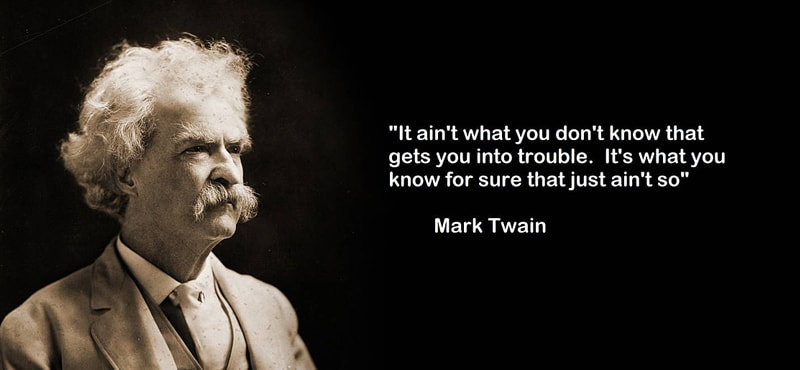
Why does he allow this confusion to happen, especially amongst his own disciples? In short, Jesus’s most mysterious words and actions bless his disciples by pruning them of the kinds of false beliefs and expectations, which, if he spoke more straightforwardly, they’d be tempted to pin to him. He is breaking the ground so the seed can go in. The path is the hardest ground, the least likely place for the seed to take root, precisely because it is the most familiar and trodden ground of all. “Oh, you’re the Messiah! Great, I know exactly what you mean by that.” But no, you don’t, because your idea of the Messiah is a damnable misunderstanding, which needs to be un-understood before it can be received aright. As Mark Twain put it, “It ain’t what you don’t know that gets you into trouble. It’s what you know for sure that just ain’t so.”
Jesus will not let old wineskins carry new wine. Thus he spends his whole ministry not so much pouring out new wine as forming new wineskins. After all, if he merely poured out the new wine, the old wineskins would explode and the new wine would be wasted (Matthew 9:17).
Jesus, Son of Joseph
In this sense, Jesus’s ministry resembles that of Joseph in the Book of Genesis perhaps more than any other figure in the Old Testament. Joseph, if you recall, is the favorite son of Jacob, who is almost murdered and then sold into slavery by his envious brothers. Joseph faithfully perseveres through trials of many kinds and eventually becomes a great prince in Egypt, to whom his brothers unknowingly come begging for food in the midst of a famine. Importantly, they do not recognize him when they come, but he recognizes them. He can see the truth. They cannot.
At this point, the text subtly hints that Joseph truly loves his brothers and is ready to forgive them on the spot, even though they show no indication of remembering who he is or what they have done to him. But—shock and horror—instead of simply revealing himself and forgiving them on the spot, Joseph opts for another, less direct route. He not only remains concealed to them, but adds new and deeper layers of concealment. In fact, he initiates a long-con against (for?) his brothers, which takes a few chapters to play itself out.
Meanwhile, the modern Christian reader is thinking, “Joseph, why don’t you just forgive them if you love them so much!” But no, he won’t. Not like that. Joseph understands something that we don’t. So he proceeds with his long-con. He frames and accuses his brothers of a crime, forcing one brother to be held captive in Egypt while they go and retrieve their youngest brother, Benjamin, the new-favorite son of Jacob, that is, the new Joseph. They don’t want to do it, but Joseph forces their hand. Then, when they finally bring Benjamin back, Joseph frames Benjamin of an even higher crime! The brothers are absolutely terrified. All the horrible memories are coming back to them. They have already had to live with their father’s grief, having lost one favorite son by their own misdeeds. Now it’s all happening again. But, at the very last minute, Judah (the one whose idea it was to sell Joseph into slavery in the first place), steps up and says to Joseph, “Take me. Let me take my brother’s place, so he can go home to his father.” At this, Joseph finally breaks down and reveals himself, and the family is reconciled.
Concealment. Concealment. Revelation. No. No. Yes.
And why? Why does Joseph put his brothers through all this agonizing hiddenness? Because the brothers needed more than mere revelation (which they could not have received anyway) and more than mere forgiveness (which would have been for a crime they hardly acknowledged). They needed the soil of their hearts to be tilled, so that they would finally be ready when the moment of revelation and forgiveness came.
Joseph somehow understood all this. Being the son of Jacob, it was in his blood to be a trickster. His father had tricked his brother Esau so that he could receive the blessing. Now Joseph had tricked his brothers so that they could receive the blessing. He perfected the family trick through love, being at once the image and the redemption of his father.
Jesus, then, is the new and final Joseph (it’s no wonder his father’s name is Joseph and, by the way, his grandfather’s name is Jacob!). He conceals in order to reveal at the proper time. He tricks us, not ultimately to throw us off, but to lead us finally to the proper reception of the blessing he has always wanted to give but which we could not receive until the trick reached its climactic conclusion. The cross is the climax of the trick: stumbling block to Jews and foolishness to Greeks, a moment no one was ready for and an ending no one (but Satan) could have wished for. And yet, somehow, the whole world was sucked into that one place and time—Jews and Gentiles, friends and enemies—to deny him, scoff at him, and nail the nails into his hands and feet. God was murdered, and we were all participants.
It was a good trick, the best trick. He led the horse to water, and the horse drank. At the cross, we were forced to face ourselves and him, being simultaneously condemned and redeemed by the Light we would have otherwise eternally fled. Now, thanks to him, we can walk in the light as he is in the light and share in the blessing which he always intended to give but which we could not and would not receive, until he became the curse for us. What we meant for evil, he meant for good (Gen. 50:20). That is how Jesus was Joseph to us.
Conclusion
The secret hidden in the Parable of the Sower is that Jesus is not only the seed-planter but also, and perhaps more importantly, the master soil-tiller. The truth (the seed) is simple, and there’s plenty to go around. The problem is the lack of fertile soil. Jesus’s words and deeds in the Gospels can be seen as one big project of soil-tilling in preparation for the crucifixion, resurrection, and ascension of Christ. Likewise, our present calling can be seen as the soil-tilling of our neighbors’ hearts as we await his second coming in glory.
The American church has spent decades debating the question “What is the gospel?” under the seeming assumption that, if only we can zero in on the best and clearest formulation, then the truth will “sell itself.” But as Jesus’s ministry makes clear, the truth rarely works that way. Get the biggest megaphone you can find. Speak the truest, clearest words you can imagine. It still will not go through. Or, even if it does, it may yet be choked out by thorns you failed to account for. Christ’s own method was not the megaphone method. He didn’t go around repeating the same straightforward message to different audiences, but rather approached each and every person and occasion with a different tack. Where he found weeds, he tugged at them gently. Where he found a path, he brought out the bulldozer.
95% of Christian ministry is soil-tilling.
Jesus came to till the soil of our hearts, to play the long game with his disciples, not just giving them the truth, but making sure the truth he wanted them to receive could, in fact, go in. The kingdom of God is a patient kingdom. Even when Peter confesses that he is the Christ, he’s not ready. (Get behind me Satan!”) Even when Jesus dies, he’s not ready. (“You will deny me three times.”) Even when he appears to him in a vision after the resurrection and Pentecost with the revelation of Gentile inclusion, Peter can hardly receive it. (“Surely not, Lord!”) And yet, he does receive it, and founds the church upon these very truths, which once had fallen on the path, rocks, and thorns of his own sinful heart.
So it is with us. God is founding a patient kingdom in us. The mustard seed is becoming the largest tree in the garden. The Spirit is tilling the soil of our hearts to receive more and more of him. And we must do the same with one another. This is how Christ preached the gospel. This is how he is remaking the world. And this is how we join him.
A seminal work. Saving to read over and over again. Thank you.
This is INCREDIBLE work on a long-debated and misunderstood parable. I am speechless.